Precast Concrete Box Culverts
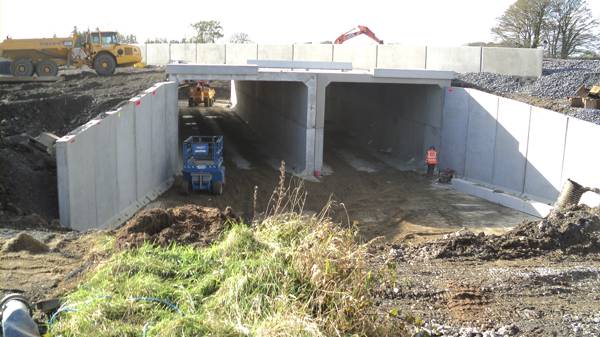
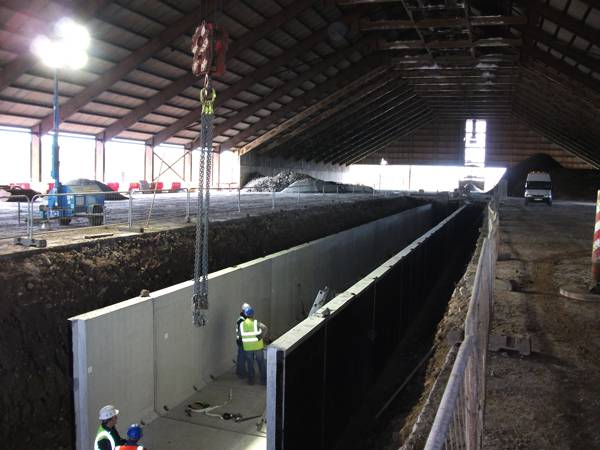
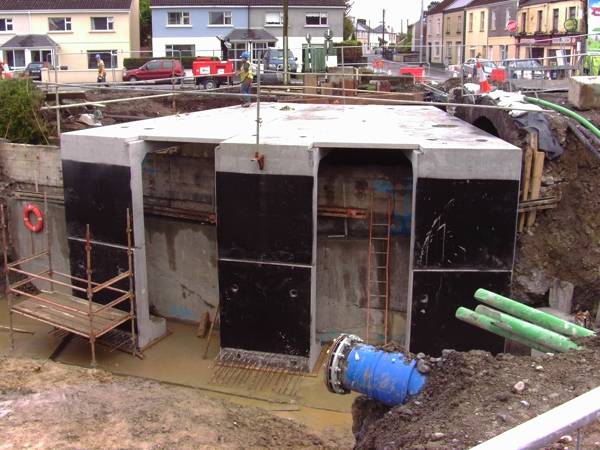
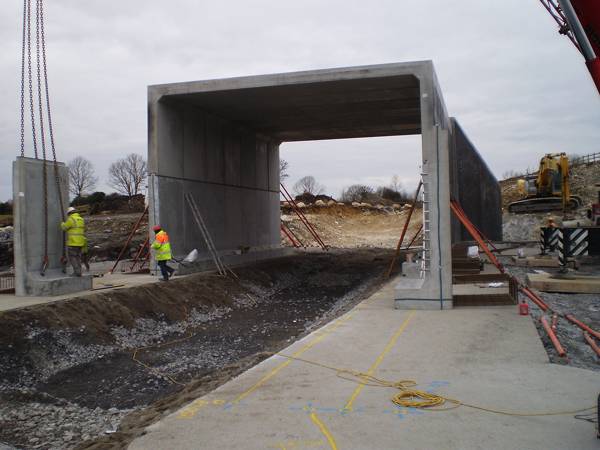
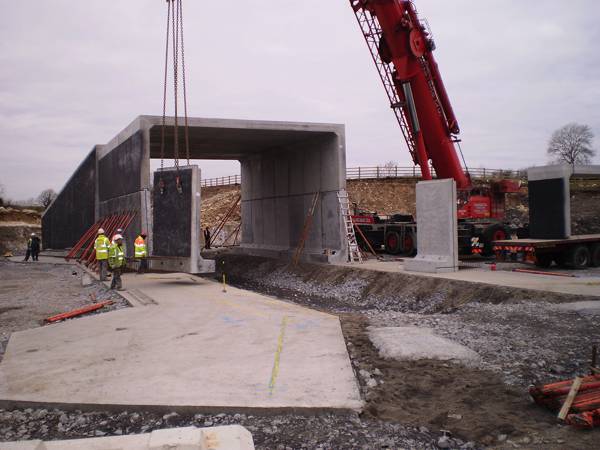
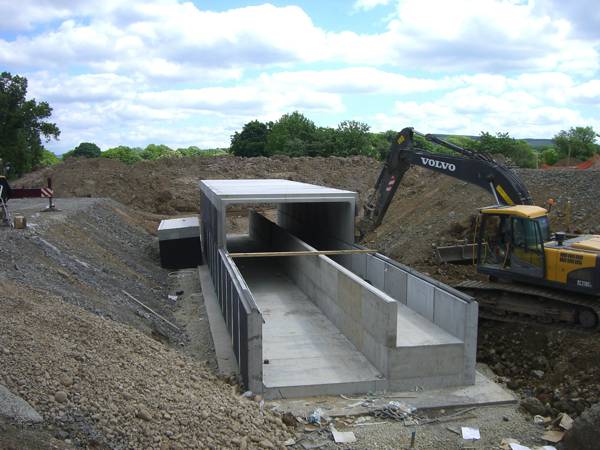
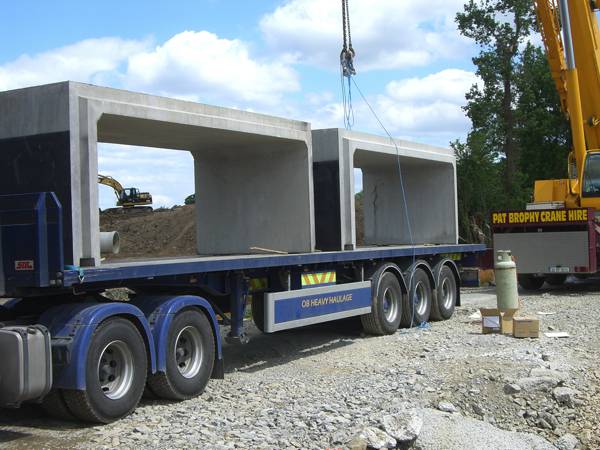
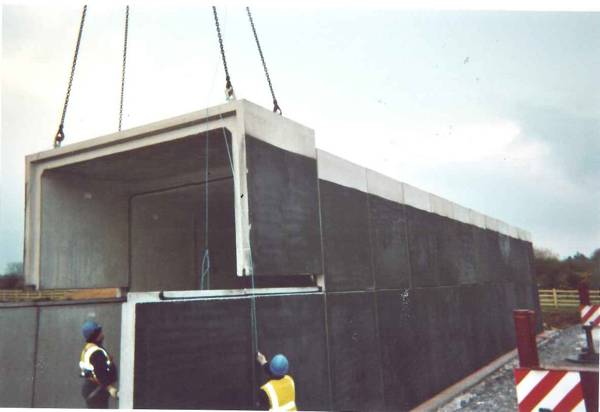
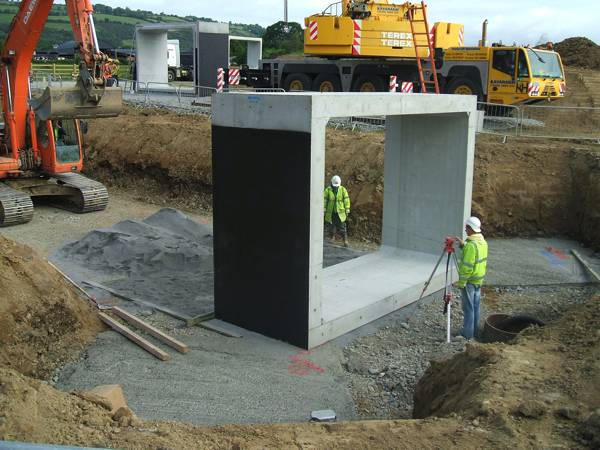
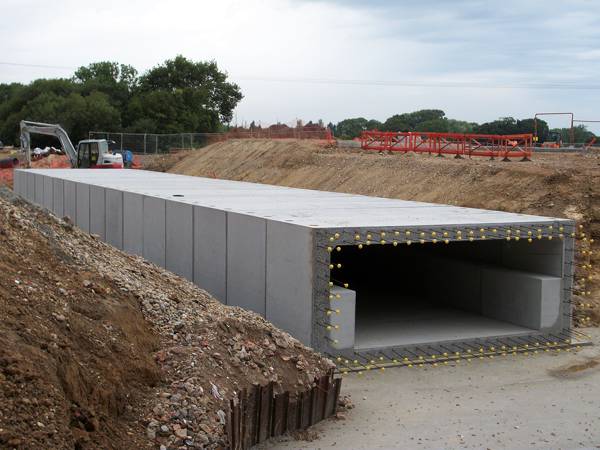
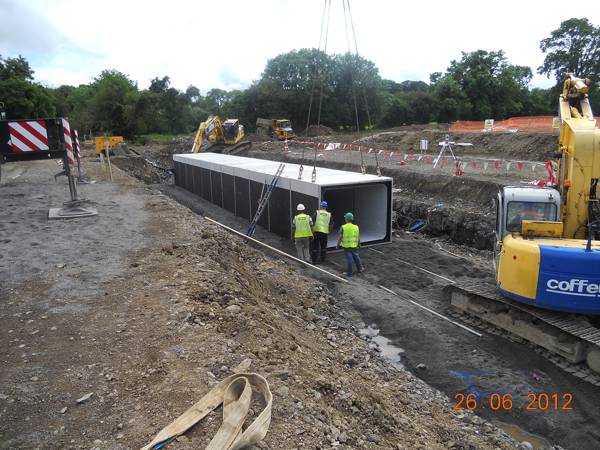
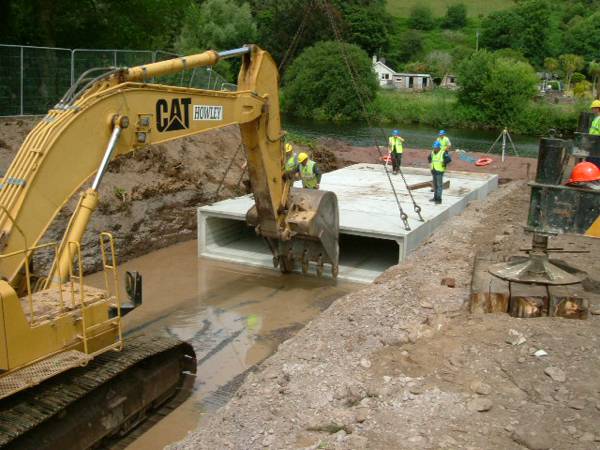
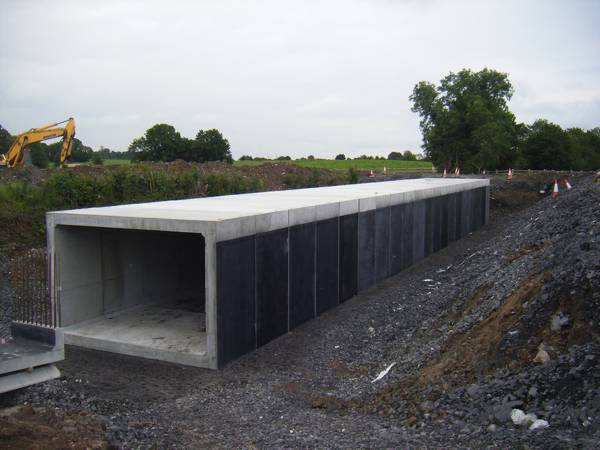
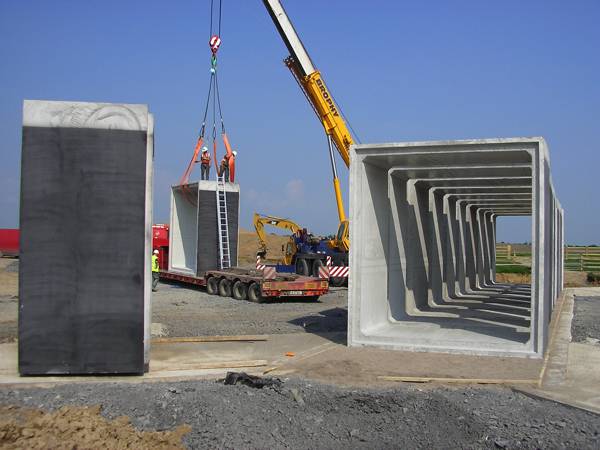
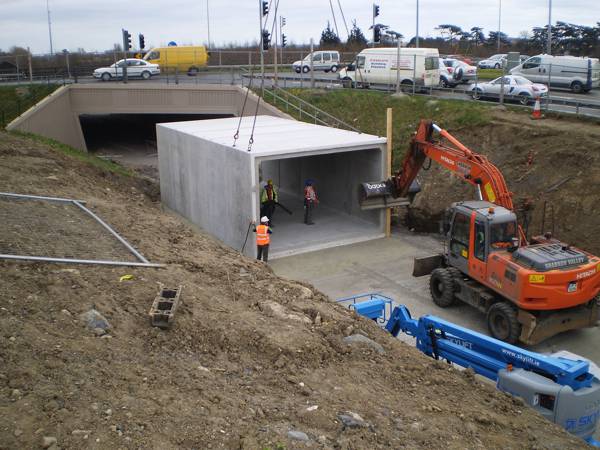
Precast Concrete Box Culverts, an easily-installed conduit used to enclose small roads, pathways or flowing water (e.g. streams, stormwater or drains) passing beneath roads, railways or embankments.
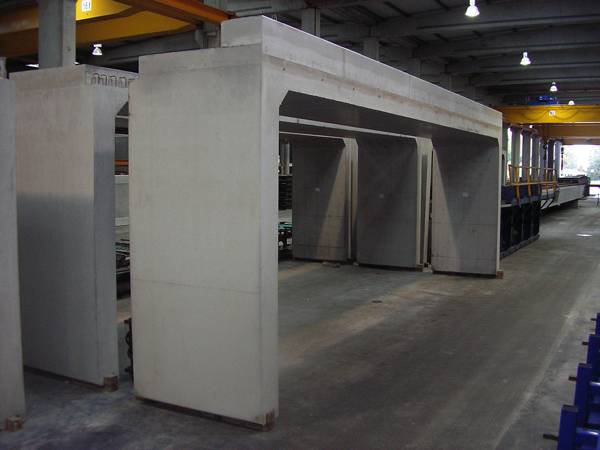
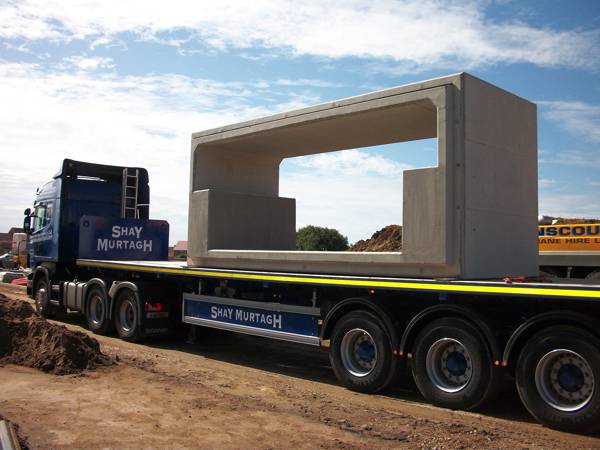
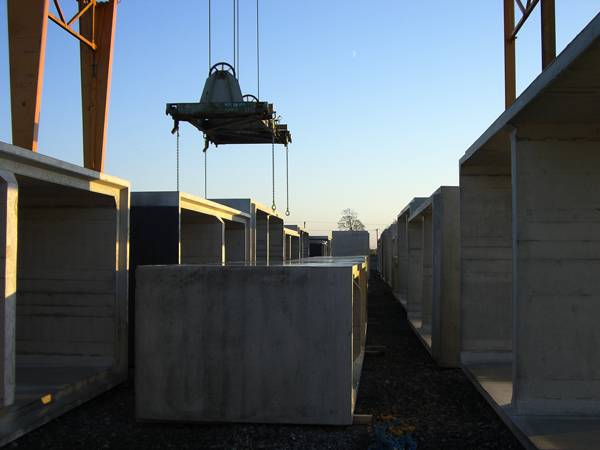
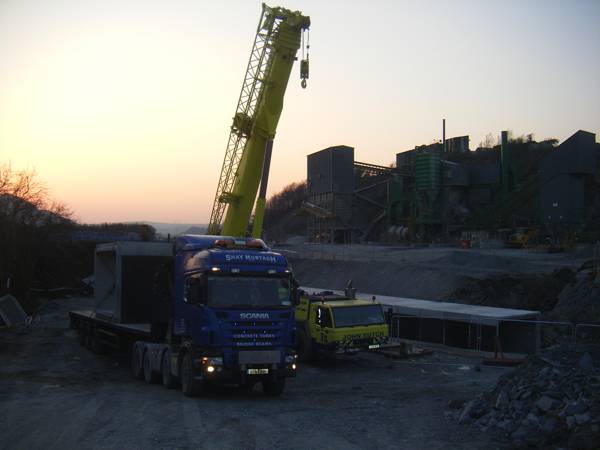
Shay Murtagh Precast is one of the largest producers of precast concrete box culverts in the UK and Ireland. With our modern and mechanised box culvert production facilities, we can produce over 60 metres of culvert section per day. We manufacture a range of standard stock size box culverts but most units we design and manufacture to meet individual project specifications. This allows us complete flexibility and enables us to manufacture culverts that can accommodate any situation.
Jointing
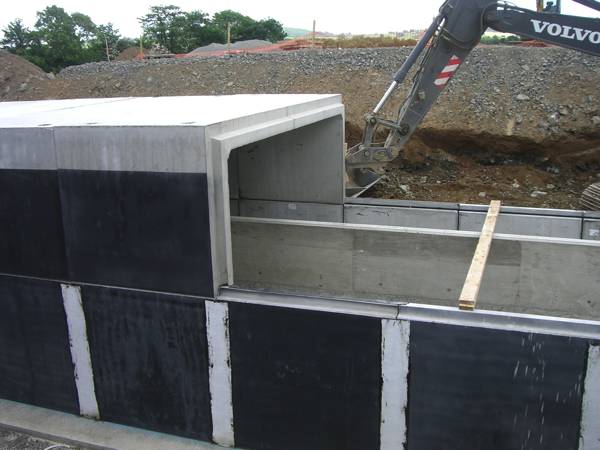
The culverts are supplied with rebated joints to prevent a vertical drop at the interface between adjacent precast units while simultaneously allowing potential differential settlement to occur between units without introducing unwanted load effects in the culverts. Shay Murtagh Precast has developed a joint detail that is effectively sealed.

Wingwalls & Headwalls & Mammal Ledges
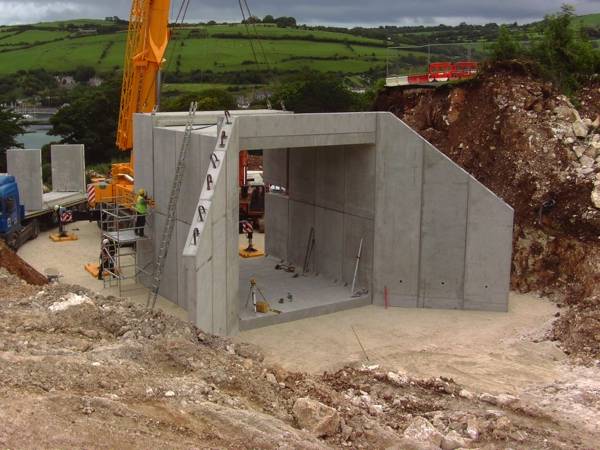
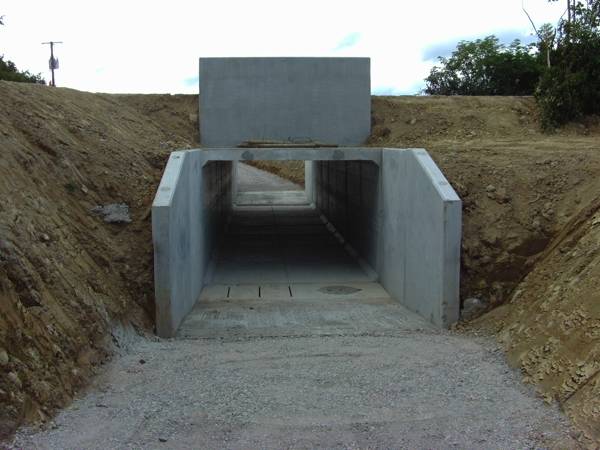
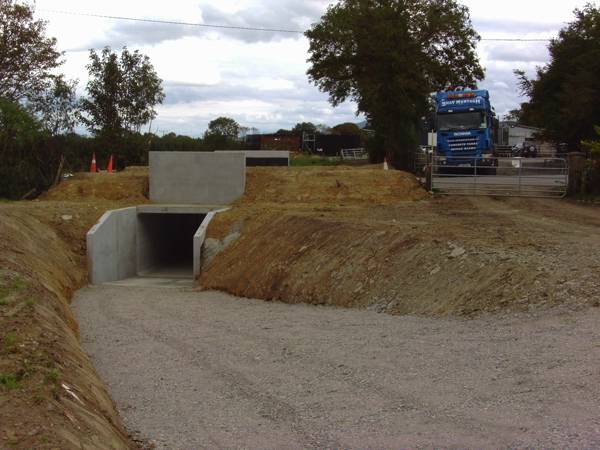
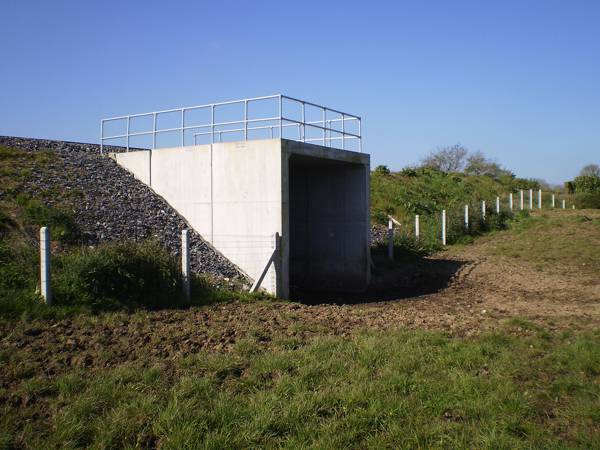
Shay Murtagh Precast also manufactures, as standard, the precast wingwalls and headwalls used at the ends of the culvert run. This ensures effective flow into and out of the culvert and retains the embankments associated with the same.
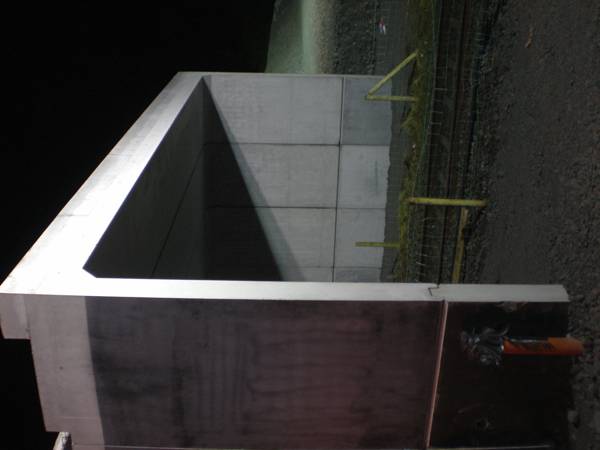
Wingwalls are effectively precast concrete retaining walls placed at the culvert entrance and exit. The tops of the walls are sloped to match the embankment contours. Wing walls help to form and protect the ends of the culvert. They are designed and manufactured to satisfy the required site conditions, loading requirements and ground conditions.
Headwalls, also known as head beams, are typically located between wing walls at the ends of the culvert and are attached to the top slab of the culvert. Serve to retain any soil above the culvert at the very end of the culvert run in order to form and protect the culvert entrance and exit. Headwalls often also serve as a more suitable attachment for safety fencing and handrails.
Shay Murtagh Precast can include mammal ledges where required within the manufacturing process for box culverts. The flexibility in our design and manufacturing process allows us to comfortably accommodate almost any additional concrete components or required provision of openings within the standard culvert section.
Design Service
Our in-house team of highly experienced engineers and technicians deliver a top-quality design and detailing service that is both thorough and flexible. Detailed designs, carried out in-house for each individual project. This allows us optimal flexibility with regards to job-specific constraints and conditions while enabling us to optimize the detailed design and produce the corresponding drawings and details rapidly.
Shay Murtagh Precast Concrete Box Culverts are typically designed & detailed in full compliance with
- EN 1992-1-1,
- EN 1992-2,
- EN 1991-1-1,
- EN 1991-2,
- EN 1990
- EN 1997-1
- the relevant National Annexes for the said Eurocodes,
- PD 6694-1,
- BS 8500-1 and
- BS 14844:2006+A1:2008.
Where required, we can design and detail culverts to the old British Standard in force prior to the adaption of the Eurocodes. In fact, the range of experience, technical capability and flexibility of our design team enables Shay Murtagh Precast to comply with any required standard or specification.
Variations on Precast Box Culverts
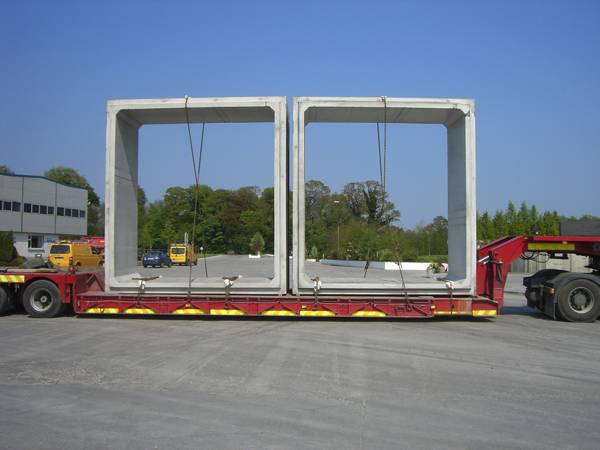
Shay Murtagh frequently manufactures several other types of precast culverts beyond the common box culvert cross section. Large box culverts that cannot be transported as a single unit, constructed from two U-sections for on-site assembly with a ball and socket joint used between the two halves of the finished box section. Referred to as UAN culverts.
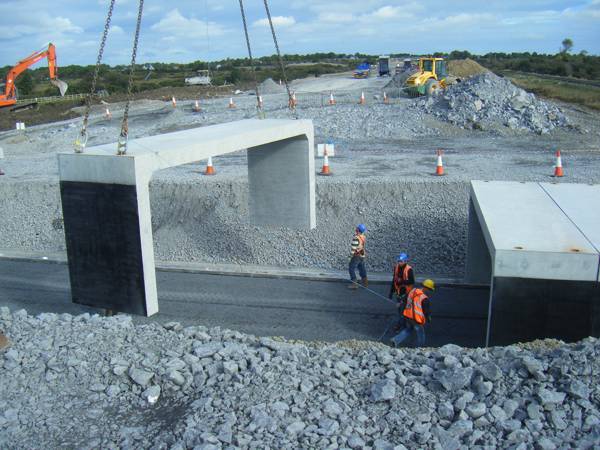
We also supply three-sided U-sections if the project specifies access from above. The U-section, left permanently open or supplied with a separate precast lid placed on top of the walls of the U-section. Similarly, we design and manufacture three-sided portal frames in situations where a bottom slab, prohibited or deemed an economic disadvantage. These include both single unit portal frames for shallower crossings and portal frames placed on precast base legs (referred to as jointed portal frames) for culverts spanning over railway or other crossings with high clearance requirements.
Shay Murtagh also has the capability to design and manufacture double cell box culverts.
We can manufacture skewed and splayed culvert units where required.
Finally, we have developed standard details including closing walls that allow our culverts for use as attenuation tanks.
Box Culvert TECHNICAL MANUAL HAS MOVED
Recent Box Culverts Blogs
We are proud to have worked on some of the biggest infrastructure projects in Ireland and the UK.
Our qualified design team work with major contractors to develop value engineering solutions.
Standard Culverts Design Gallery


Bespoke Culvert Design Gallery